
FOR PLAYERS 50+ WHO AREN'T DONE COMPETING
Martha Almost Quit Pickleball at 61. Then a Physical Therapist Explained Why Her Knee Sleeve Was Never Going to Work.
The 10-second pre-match ritual more 50+ players are adopting — and the simple reason the sleeve in your drawer squeezes the wrong spot.

Martha is 61. She plays pickleball three mornings a week in Scottsdale, Arizona — Tuesday round-robin, Thursday ladder, Saturday with her sister.
Last fall, mid-game, she felt it. Not pain exactly. A warning. A sharp twinge just below her kneecap as she pushed sideways for a drive.
She finished the game. Of course she did.
But that night she caught herself typing something into Google she never thought she would: “knee pain pickleball when to stop playing.”
Her regular partner had already stepped away the year before. Knees. Now she watched from the shade ramada with a coffee while the Tuesday group played on without her.
“That’s what actually scared me,” Martha says. “Not my knee. That bench.”
So she tried what everyone tries. A drugstore sleeve that rolled down by the second game. Two weeks of rest that just made her stiffer. Ibuprofen before matches, which felt like cheating a warning light.
Then her daughter booked her one visit with a physical therapist — and for the first time, someone explained what was actually going on.
First, the proof: players who switched
“Played two full matches and didn’t think about my knee once. That’s the best review I can give.”
“I used to hold back on quick side steps. Now I’m moving again without constantly worrying about my knee giving out.”
“Most sleeves just squeeze my leg. This actually feels like it sits where I need support — right under the knee.”
“I bought the two-pack thinking one would be a backup. My wife took the second one after trying mine.”


So what do these players know that the sleeve-wearers don’t? That’s where Martha’s physical therapist comes in.
Here’s what nobody tells you about knee sleeves.
A basic compression sleeve squeezes your whole knee evenly. Like a sock.
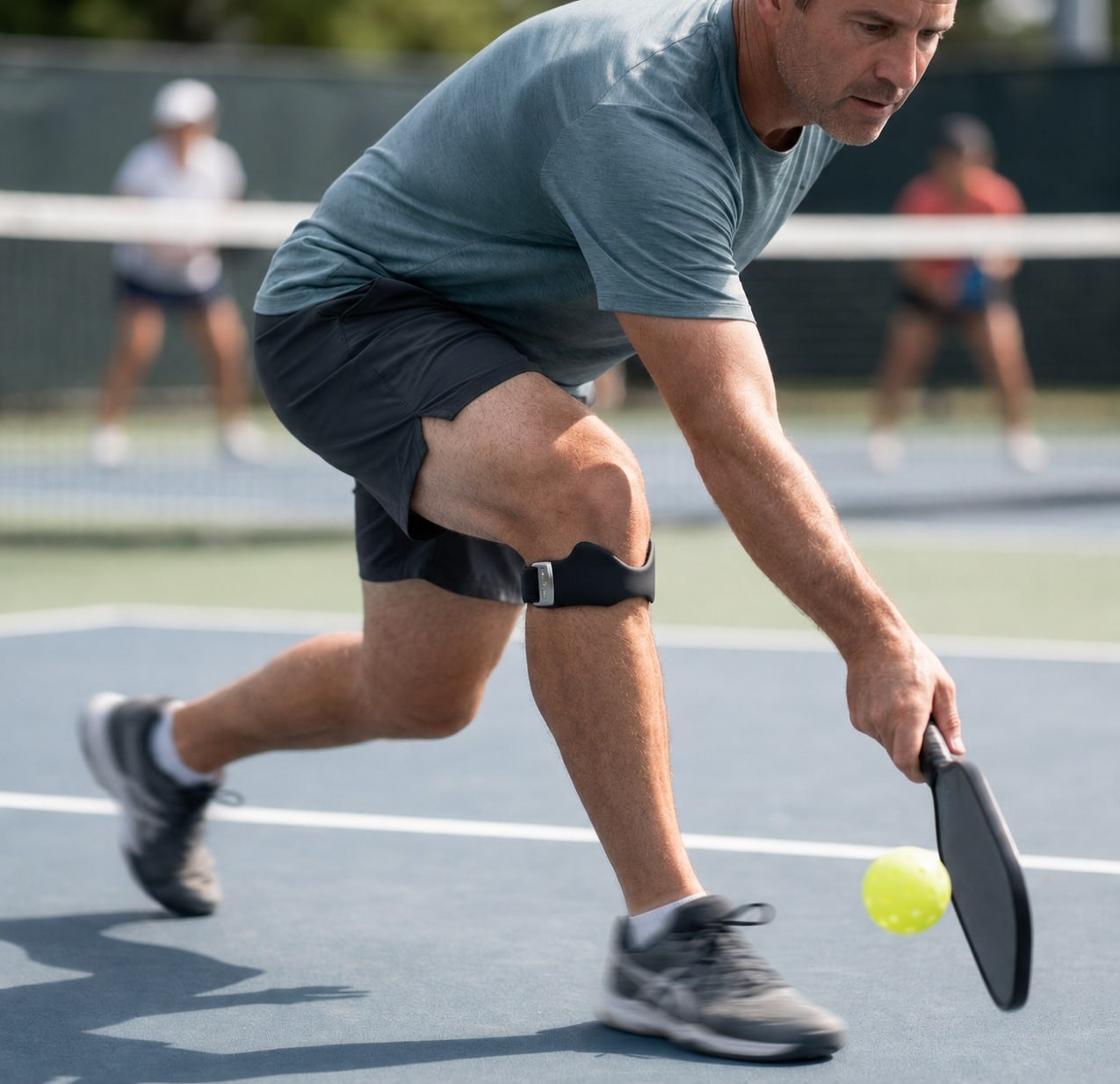
But pickleball doesn’t load your knee evenly. It’s a lateral sport — hard side-to-side pushes, sudden stops at the kitchen line, quick lunges. That load concentrates below and around the kneecap.
An even squeeze does almost nothing there. That’s why the sleeve feels fine in warmups… and useless by game three.
Rest doesn’t break the cycle either. Sit out a month and the muscles that support your knee get weaker — so you come back with less protection, not more.
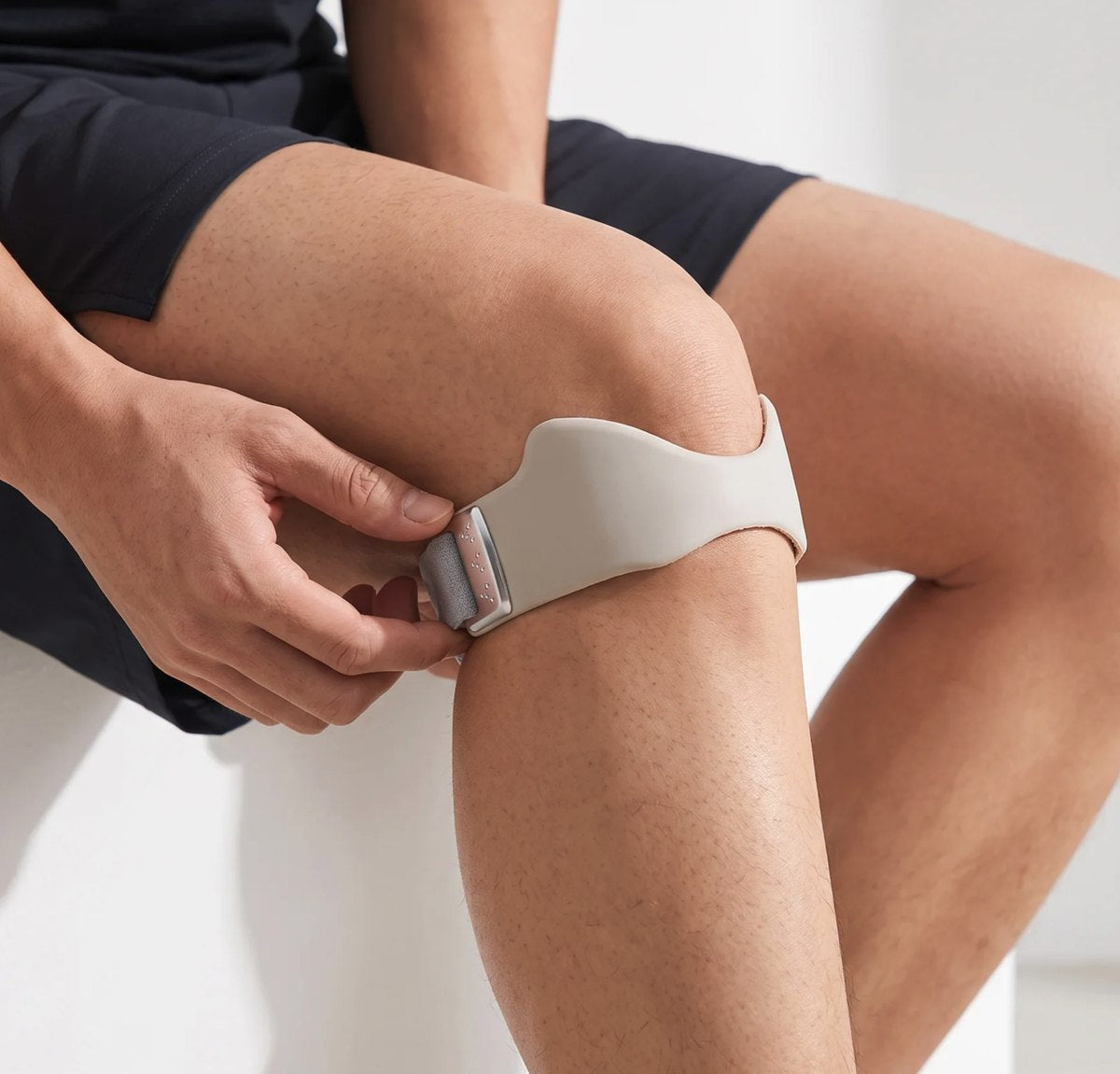
PTAsk a physical therapist about this and you’ll hear the same explanation: a generic sleeve compresses everywhere, which means it targets nothing. The complaint isn’t constant — it spikes on lateral pushes and landings, because that’s when the patellar tendon takes its biggest load. Even pressure can’t change that load. So the sleeve “works” right up until the exact moment you need it.
For Martha, that one explanation made sense of three years of frustration.
What targeted support actually does
You may already know this principle from a different joint: the small strap tennis players wear below the elbow.
That strap doesn’t heal anything. It applies focused pressure that changes the angle of pull on the tendon — so each swing loads it differently, instead of hammering the same spot.
The same counter-force idea applies below the kneecap. A contoured support shell hugs around the patella and the sides of the joint, with two adjustable straps that let you set the pressure — snug for match day, lighter for errands.
PTIt’s the tennis-elbow strap concept, applied to the knee. Focused support at the patellar tendon slightly alters the patella-tendon angle, which research suggests reduces strain on the tendon. In studies of patellar straps, most users reported improvement in their symptoms, and testing showed less pain during jumping tasks and a lower inward-collapse load on landing — the same load pattern as side-to-side court movement.
Players describe the feeling one way, over and over: “held.” Not squeezed. Not stiff. Held — so you stop negotiating with your knee and start watching the ball again.
That’s the mechanism a small company built an entire product around:
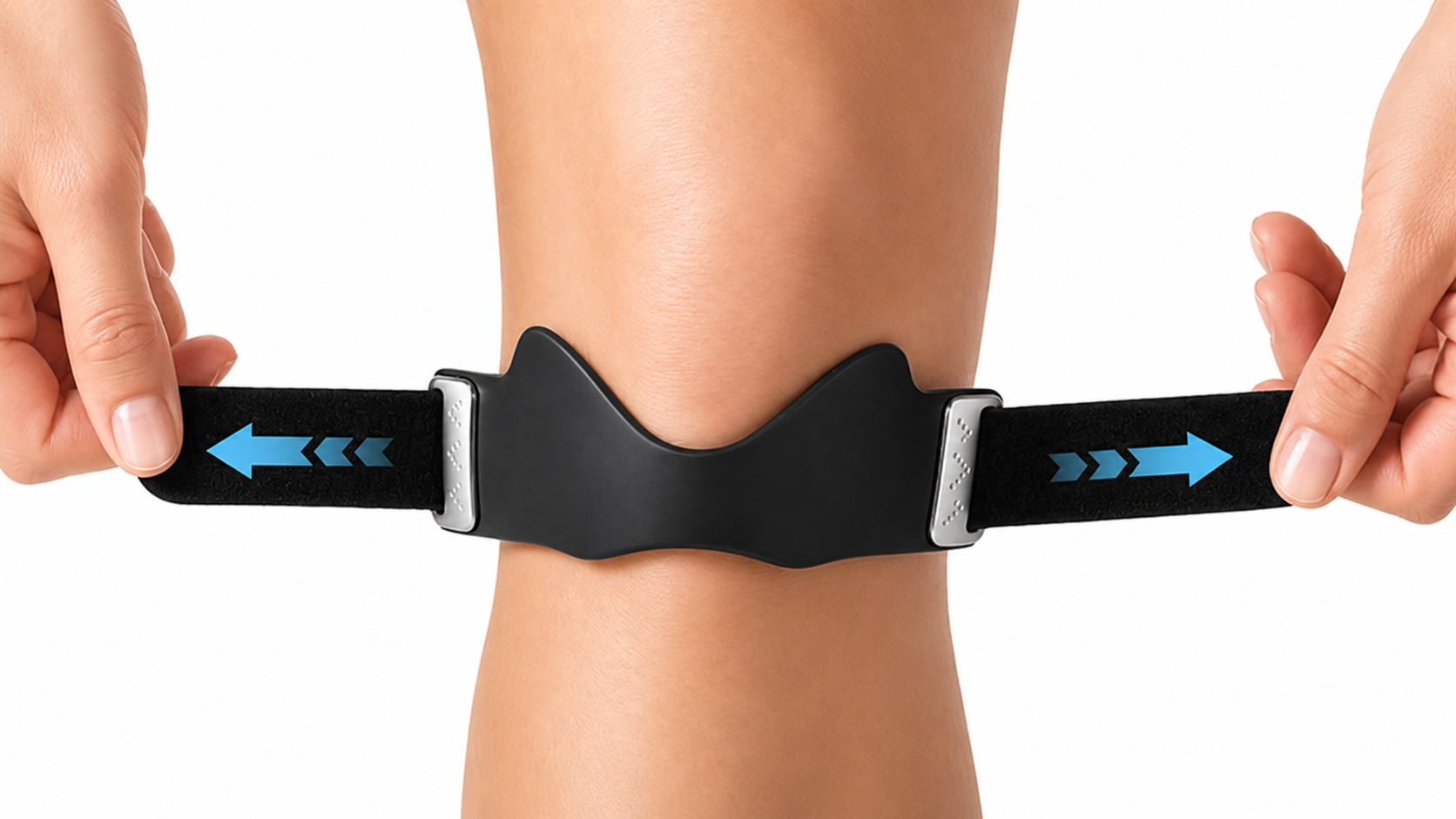
CourtBrace Pro — a low-profile knee support with a contoured shell and dual adjustable straps, designed for the stop-start, lateral movement of court sports.
Ten seconds to strap on before a match. That’s the whole ritual.
Why this isn’t the sleeve in your drawer
- It stays put during lateral movement. Straps anchor it above and below the knee. No rolling down mid-game, no tugging it up between points.
- You set the pressure — not the fabric. Adjustable tension means your knee, your setting, every session. A sleeve gives you whatever the elastic decides.
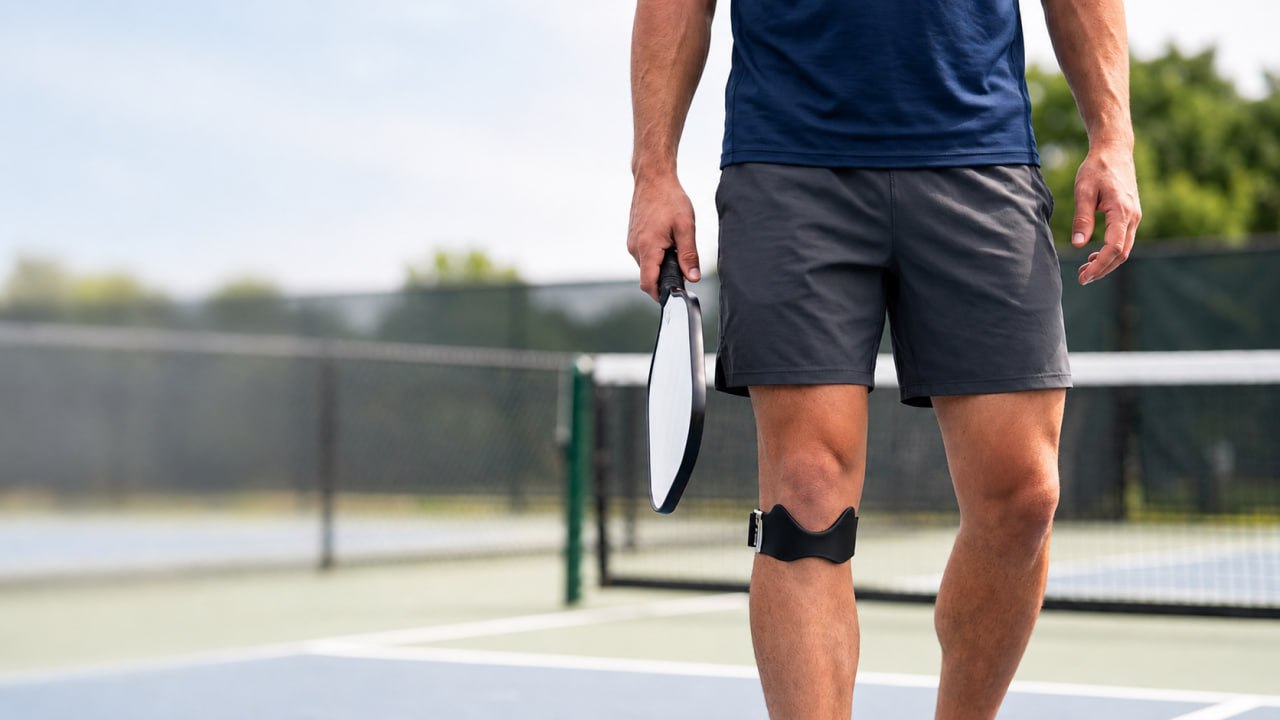
- Built for 2-hour round-robins. Low-profile and breathable — it disappears under shorts instead of announcing itself like a hinged brace.
- Support where court sports load the knee. Contoured around the kneecap — not a uniform squeeze designed for sitting at a desk.
The questions every player asks first
“Will it slide down like my sleeve?”
No — that’s the specific problem the strap system solves. It anchors above and below the joint. Set it once; it’s still there at 10-10.
“Won’t my muscles get lazy if I wear support?”
PTHere’s the honest answer physical therapists give: support like this helps you manage load during play — it isn’t a substitute for treatment or strength work. The strongest evidence for long-term improvement is load-modification exercise, especially simple quadriceps strengthening. So the plan is both: targeted support on court, and ten minutes twice a week on your quads — not one or the other.
That honesty is the whole point: no single product is a plan by itself.
“Is it hot and bulky?”
It’s an open, low-profile shell — not a full neoprene tube. Most players forget it’s on by game two.
“What if it doesn’t fit me?”
The straps adjust across a wide range of legs — that’s the point of adjustable. And the 100-day guarantee below puts the risk on us, not you.
“Is this another gimmick ad?”
Fair. You’ve seen the miracle-cure stuff, and this isn’t that. No cure claims — a mechanism you can understand, worn by players like you, with 100 days to test it in real matches and your money back if it’s not for you.
The Match-Ready Pack

- 1× CourtBrace Pro — $29.99
- +1 FREE (both knees, or one for your doubles partner) — $29.99 value
- Free US shipping
- 100-Day Comfort Guarantee
$99.98 $49.99
For perspective: a single PT copay often runs $30–75. A month of club dues costs more. Giving up Tuesday mornings costs the most of all.
Play 10 matches in it. Then decide.
Wear CourtBrace Pro for the next 100 days. Ladder nights, Saturday doubles, all of it.
If your knees don’t feel more supported — if you don’t move with more confidence at the kitchen line — send it back for a full refund. No forms that fight you, no restocking-fee fine print.
You risk nothing. The bench can wait.
Your Tuesday group is counting on you.
Questions, answered
Will it fit me?
CourtBrace Pro uses adjustable straps rather than fixed sizes, so it fits a wide range of legs and lets you set your own tension.
How fast is US shipping?
Free tracked shipping on the 2-pack offer. Delivery estimates for your address are shown at checkout.
What if I want to return it?
You have a 100-day comfort guarantee. Email support@courtbrace.com and we’ll handle the return and full refund.
How do I wash it?
Hand-wash with mild soap, air dry. No machine drying.
Is this a medical device? Will it fix my knee?
No. CourtBrace Pro is a support product, not a substitute for medical care. It’s designed to provide adjustable support, stability, and a more confident feeling during movement. For persistent pain, swelling, or an injury, see a doctor or physical therapist first.
Can I wear it under clothing?
Yes — low-profile enough for shorts, leggings, or pants.
Which sports is it for?
Designed around the lateral movement of pickleball, tennis, paddle, and racquetball — players also use it for walking, gym days, and everyday movement.